
Coronary artery disease can cause plaque to accumulate inside the coronary arteries, restricting blood flow to the heart muscle. During percutaneous coronary intervention (PCI), balloon dilatation catheters are used to expand narrowed arterial segments and prepare lesions for further treatment. However, not all coronary lesions respond easily to conventional balloon inflation.
Heavily calcified lesions, fibrotic plaque, and rigid arterial segments can resist expansion, creating challenges for lesion preparation and stent deployment. In these situations, selecting an appropriate balloon catheter becomes an important consideration for interventional cardiology teams.
A coronary cutting balloon is one specialized option designed to modify resistant plaque through controlled mechanical action. Understanding how this device differs from a conventional balloon dilatation catheter helps healthcare providers and procurement teams evaluate suitable technologies for complex coronary interventions.
How a Coronary Cutting Balloon Works
A conventional balloon dilatation catheter primarily relies on inflation pressure to expand a narrowed vessel segment. When the balloon inflates, it applies radial force against the surrounding plaque and arterial wall. Its effectiveness depends on lesion characteristics, balloon dimensions, and the pressure required to achieve the intended expansion.
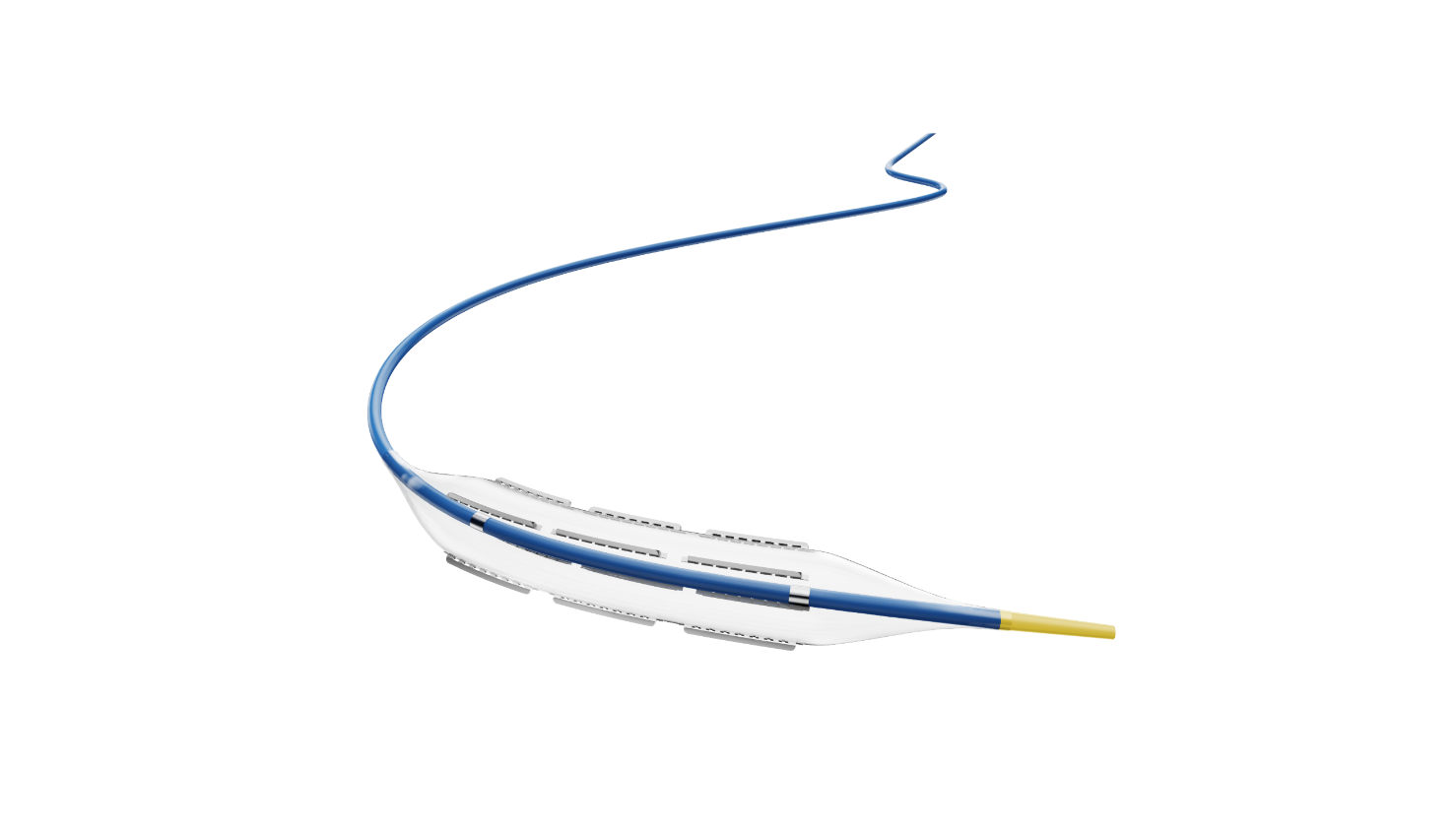
A coronary cutting balloon incorporates small longitudinal blades or cutting elements on the balloon surface. During inflation, these elements are designed to score resistant plaque during controlled balloon inflation, helping modify resistant tissue and facilitating vessel expansion.
This mechanism can be useful in selected lesions where conventional balloon angioplasty produces a persistent indentation, commonly referred to as a balloon waist. By concentrating force along specific cutting elements, the device can alter plaque behavior without relying exclusively on uniform radial pressure.
Nevertheless, a cutting balloon is not appropriate for every lesion. Its selection requires consideration of lesion anatomy, calcification patterns, vessel size, and the overall PCI strategy.
Choosing Between a Cutting Balloon and a Conventional Balloon Dilatation Catheter
The choice of balloon technology depends on the clinical objective and the characteristics of the target lesion. Conventional balloon dilatation catheters remain widely used for routine predilatation, postdilatation, and other applications where standard balloon expansion is appropriate.
For selected resistant lesions, a coronary cutting balloon may provide an alternative approach to plaque modification. Its cutting elements can help address fibrotic or otherwise resistant tissue, potentially improving lesion compliance before subsequent treatment.
Severely calcified lesions may require additional strategies, including specialized calcium modification technologies. A cutting balloon should not be assumed to replace these approaches in every case. Clinical assessment and the operator’s judgment remain central to device selection.
For hospitals, distributors, and medical device purchasing teams, evaluating these products involves more than comparing nominal balloon diameter and length. Important considerations include deliverability, profile, inflation performance, pressure specifications, compatibility with the intended procedure, and the availability of appropriate sizes.
Key Performance Factors in Resistant Coronary Narrowing
Several device characteristics influence how a balloon dilatation catheter performs in challenging coronary anatomy.
Balloon compliance and expansion control are important when predictable expansion is required. The relationship between inflation pressure and balloon diameter should be clearly documented in the manufacturer’s specifications. Operators can then select an appropriate device based on the intended application.
Crossing profile and deliverability also matter because tight or tortuous coronary lesions can make device advancement difficult. A suitable catheter design should balance trackability, pushability, and the ability to reach the target lesion.
Pressure ratings and dimensional accuracy support appropriate device selection and procedural planning. Medical professionals should review the specified rated burst pressure, recommended inflation parameters, and available balloon sizes rather than assuming that all catheters offer equivalent performance.
For cutting balloons, the design and arrangement of the cutting elements are additional considerations. Their configuration influences how the device interacts with plaque during inflation and should be assessed against the intended clinical application and the manufacturer’s validated specifications.
Shunmei SafeCut: Design Considerations for Coronary Intervention
Shunmei’s SafeCut Coronary Cutting Balloon Dilatation Catheter combines balloon dilation with blade-based plaque scoring for lesion preparation in selected coronary interventions. Its design addresses several practical considerations associated with catheter delivery and controlled expansion.
The catheter features a dual layer balloon structure, a noncompliant balloon with pressure resistance specified up to 20 atm, and a high pushability shaft intended to support advancement through challenging coronary anatomy. A hydrophilic coating is designed to reduce friction during navigation, while the sharp edged blade structure supports directional plaque scoring.
SafeCut is compatible with a 0.014 inch guidewire and has an effective catheter length of 145 cm. Available configurations include balloon diameters from 2.00 mm to 4.00 mm and balloon lengths from 5 mm to 20 mm, providing options for different target vessel dimensions and lesion lengths. Final selection should follow the manufacturer’s instructions for use and the treating physician’s assessment.
For distributors and healthcare institutions, these specifications provide a practical starting point for evaluating product compatibility, inventory requirements, and procedural applications. Reviewing the complete technical documentation and applicable regulatory information is essential before introducing a device into a particular market or clinical setting.
What Healthcare Buyers Should Evaluate Before Selection
When assessing a coronary cutting balloon or conventional balloon dilatation catheter, purchasing teams should consider the intended clinical applications, available size combinations, guidewire compatibility, delivery characteristics, and supporting documentation.
Consistency in product specifications and access to technical support can also influence long-term supplier relationships. Clear documentation helps clinical teams understand device limitations, while reliable product information supports inventory planning and communication between manufacturers, distributors, and healthcare providers.
Clinical evidence deserves equal attention. Performance data should be interpreted in the context of the study design, patient population, endpoints, and applicable regulatory requirements. No single technical feature or reported success rate should replace a comprehensive assessment of clinical suitability.
Supporting Better Decisions in Coronary Lesion Preparation
Resistant coronary narrowing requires careful evaluation of lesion characteristics and the capabilities of the selected intervention device. A conventional balloon dilatation catheter remains an essential option for many coronary procedures, while a coronary cutting balloon can offer an additional plaque modification approach for appropriately selected lesions.
With its SafeCut product line, Shunmei provides a specialized catheter design that combines directional plaque scoring, controlled balloon expansion, and delivery focused features. For healthcare institutions and distribution partners, understanding these design characteristics and reviewing the supporting technical documentation can help inform product evaluation and selection.
Ultimately, appropriate device choice depends on clinical judgment, lesion anatomy, and the requirements of each procedure. A clear understanding of balloon technology enables healthcare professionals and industry partners to assess available options more effectively and support informed decisions in coronary intervention.
