
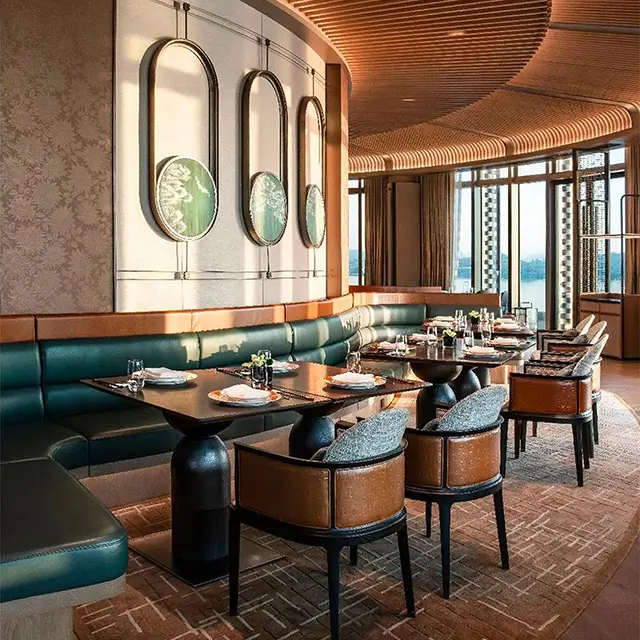
Hotel restaurants include different dining environments, from breakfast areas and lobby cafés to private rooms and banquet spaces. Each area has its own requirements for furniture layout, comfort, and daily maintenance. Selecting suitable furniture requires more than focusing on visual design. Project teams also need to consider usage frequency, cleaning needs, and space planning.
For hotel owners, designers, and procurement teams, custom furniture solutions can help match specific project concepts. The right approach combines practical functions with interior style, creating dining spaces that support both guest experience and long-term operation.
Types of Furniture Used in Hotel Restaurants
Hotel dining spaces usually include several types of furniture based on service style and guest flow. Dining tables and chairs are common choices, while buffet stations, lounge seating, and flexible furniture arrangements are also used in different areas.
In high-traffic restaurants, hotel restaurant furniture needs to balance appearance with daily performance. Furniture should support frequent movement, regular cleaning, and different seating arrangements during breakfast, lunch, and dinner services.
All-day dining venues operate from breakfast through dinner, demanding furniture that withstands continuous use, frequent cleaning, and rapid table turns. Key pieces include durable dining tables and chairs with stain-resistant upholstery, buffet stations, and flexible seating configurations.
Fine dining areas usually require a different design approach. Tables, chairs, and decorative furniture pieces need to create a comfortable atmosphere while matching the restaurant’s theme and service style.
Design Considerations for Different Dining Areas
Furniture layout affects how guests move through a restaurant and how staff complete daily tasks. Proper spacing between tables can improve traffic flow and provide a more comfortable dining experience.
Designers often review the relationship between furniture size and room structure. A large banquet hall may need movable tables and chairs, while a smaller restaurant may require a more efficient arrangement to use available space.
For many hospitality projects, hotel dining room furniture should also match the overall interior concept. Materials, colors, and finishes need to work together with lighting, flooring, and decorative elements.
Customization provides more flexibility when standard furniture sizes cannot fully meet project requirements. Adjustments in dimensions, upholstery, surface treatments, and design details can help furniture fit different restaurant environments.
Material Selection and Durability for Commercial Spaces
Materials play an important role in commercial furniture performance. Hotels and restaurants usually experience frequent customer use, so furniture choices should consider cleaning methods, maintenance schedules, and expected service conditions.
Wood finishes, metal structures, and upholstery materials each provide different characteristics. Buyers need to review whether selected materials are suitable for the environment where the furniture will be installed.
For hospitality projects, BFP Furniture provides customized commercial furniture solutions based on different restaurant and hotel requirements. They focus on project communication, production coordination, and furniture planning to support designers, contractors, and property owners.
The selection process should include clear discussions about samples, specifications, and final applications. This helps reduce changes during production and allows project teams to better understand the finished result.
Key Steps in Custom Hotel Furniture Planning
Custom furniture projects usually involve several stages, including design discussion, measurement, sample confirmation, production, and installation preparation. Early communication between suppliers and project teams can help identify possible challenges.
For hotel projects, furniture installation may need coordination with other building systems. Professional technical support, including installation preparation measurements and communication with engineering teams, can help reduce conflicts between fixed furniture and mechanical, electrical, and plumbing arrangements.
BFP Furniture supports project progress through clear and transparent communication. They provide milestone updates and bilingual communication to help international buyers follow important production stages.
Delivery planning is also an important part of hospitality projects. Buyers are generally advised to make arrangements at least 4 to 6 months in advance, depending on furniture configuration, project scope, and specific requirements. A clear schedule helps contractors coordinate different construction activities.
Furniture Solutions for Different Dining Spaces
Different restaurant formats require different furniture arrangements. Buffet restaurants often need practical layouts for food service areas, while private dining rooms may focus more on privacy and atmosphere.
Banquet spaces require flexibility because they may host different events, such as meetings, celebrations, and group dining activities. Movable furniture options can help venues adjust layouts according to changing needs.
When selecting hotel restaurant furniture, buyers should consider current operation plans as well as future adjustments. Furniture that matches the space function can support smoother management and better use of the dining area.
Hotel cafés and lounge areas may also require furniture with a balance of comfort and visual appeal. Seating choices should support longer stays while maintaining consistency with the hotel’s interior design.
How Buyers Evaluate Custom Hospitality Furniture
Choosing a furniture supplier requires attention to design ability, production process, quality control, and project support. A suitable partner should understand the requirements of commercial hospitality environments rather than only provide individual products.
Buyers can review previous project experience, sample support, communication methods, and after-sales service when comparing suppliers. These factors influence how smoothly a custom furniture project develops.
For those looking for hotel dining room furniture, supplier capability in customization and project management is an important consideration. Clear communication from design to installation can help maintain consistency throughout the process.
Building Practical Dining Spaces Through Careful Planning
Custom hotel restaurant furniture involves multiple factors, including furniture types, materials, layouts, and project coordination. A successful dining space requires a balance between appearance, comfort, and daily operational needs.
BFP Furniture works with hospitality clients to develop furniture solutions based on different commercial environments. They support projects through customization, production coordination, and service communication.
Careful planning allows hotels and restaurants to create spaces that meet practical requirements while reflecting their design concepts. By evaluating furniture needs at the early stage, project teams can build dining environments that remain functional throughout daily operations.
