
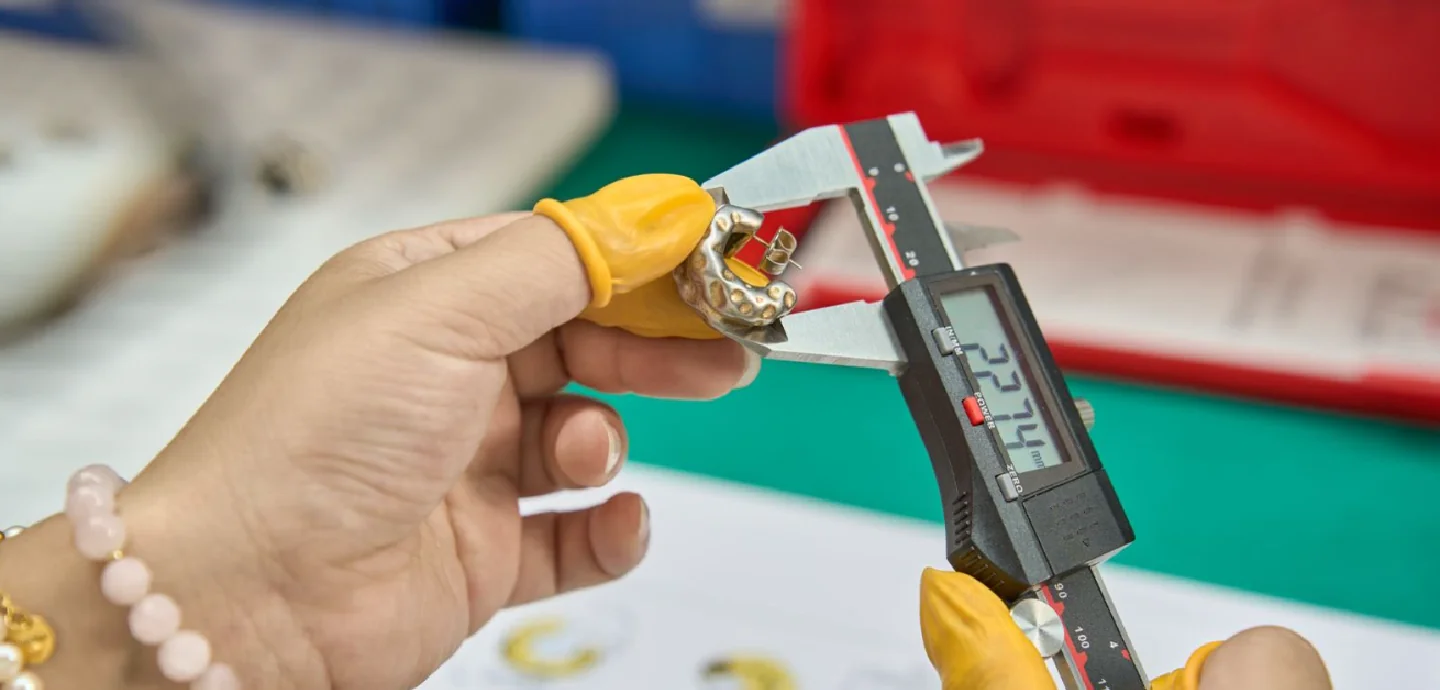
Every high-quality piece of jewelry starts as a raw, unpolished shape known in the factory as a metal blank. Before any intricate engraving or stone setting begins, a stainless steel ring manufacturer must verify the structural integrity of these basic forms. If a blank has a tiny air bubble or a surface crack from the casting mold, those flaws will only become more obvious after polishing. Detecting these issues early prevents the waste of labor and ensures that the final product can withstand years of daily wear without breaking or tarnishing. It is a gritty, essential part of the production line that separates high-end pieces from mass-market scrap.
Identifying Surface Imperfections Early
A seasoned stainless steel ring supplier knows that the stamping or casting process can sometimes leave behind subtle “cold shuts” or pits. During the blank inspection phase, workers examine each stainless steel ring under magnification to find these defects. If a batch of blanks shows consistent spotting, the stainless steel ring manufacturer can stop the line to adjust the mold temperature or the pressure of the hydraulic presses. Catching a scratch on a raw stainless steel ring is much cheaper than trying to fix it once the piece has been PVD plated. This stage ensures that the foundation of the jewelry is as solid as the steel itself.
Verifying Dimensional Accuracy
Precision is non-negotiable when dealing with finger sizes and comfort fits. A stainless steel ring supplier uses digital calipers to check that every blank matches the technical blueprint within a fraction of a millimeter. If the inner diameter of a stainless steel ring is even slightly off, it won’t fit the customer correctly, leading to costly returns for the brand. The stainless steel ring manufacturer also checks the thickness of the band at this stage. Consistent dimensions across a whole production run mean that when the rings move to the automated polishing machines, they all receive the same level of friction and shine.
Testing Material Hardness and Purity
Beyond just looking at the shape, a professional stainless steel ring supplier occasionally performs spot checks on the metal’s hardness. This involves using a specialized tester to ensure the 316L steel hasn’t been contaminated with softer alloys during the melting process. If the stainless steel ring blank is too soft, it will dent easily; if it is too brittle, it might crack during the sizing process. By confirming the material properties of the stainless steel ring before it hits the assembly line, the stainless steel ring manufacturer guarantees a product that handles the bumps and scrapes of real-world use without losing its form.
Maintaining a rigorous inspection protocol is how a factory protects its clients’ reputations. Star Harvest treats this initial check as the most critical gate in their workshop, refusing to move any piece forward that doesn’t meet their strict physical standards. Their team understands that a beautiful finish is useless if the underlying metal is flawed. By putting every item through this detailed evaluation, Star Harvest provides a level of reliability that helps jewelry brands grow with confidence. They focus on the hidden details of the metal so that the end user only sees a perfect, durable accessory.
