
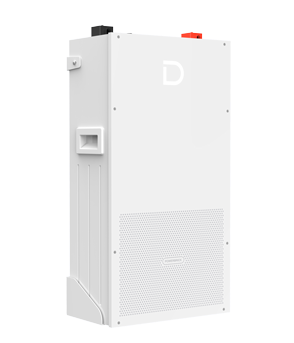
Modern residential energy systems rely on tightly coordinated interaction between solar inverters, battery packs, and battery management systems (BMS). In low-voltage architectures, especially 48V-class lithium systems, integration quality directly determines efficiency, safety, and usable capacity. A 51.2V LiFePO4 configuration is currently one of the most widely adopted standards in residential storage due to its compatibility with hybrid inverters and stable electrochemical behavior under deep-cycleoperation.
This article explains how a 51.2V LiFePO4 Home Battery integrates with solar inverters and BMS systems, and why this architecture is central to Low Voltage(LV)Solar Battery Storage design in both residential and small commercial applications.
System-Level Role of a 51.2V LiFePO4 Architecture
A 51.2V LiFePO4 system is typically built from 16 cells in series, each nominally rated at 3.2V. This configuration is widely used because it aligns with inverter DC input ranges designed for low-voltage residential storage.
Within Low Voltage (LV) Solar Battery Storage systems, batteries operate not as standalone parts but as dynamic buffers bridging photovoltaic power generation and household electricity loads. Inverters and the BMS continuously regulate internal energy flow in accordance with their respective operational limits.
At system level, the battery must support three core operations:
solar charging stabilization
inverter-driven discharge
grid synchronization support
Each function depends on communication between the inverter and BMS.
51.2V LiFePO4 Home Battery and Solar Inverter Integration Logic
The integration between a 51.2V LiFePO4 Home Battery and a hybrid solar inverter is based on DC-coupled energy exchange. The inverter acts as the central energy controller, while the battery provides storage capacity and discharge capability.
During daytime operation, photovoltaic input is first converted to DC bus power. Excess energy is directed into the battery through controlled charging algorithms. The inverter regulates charge voltage and current based on BMS feedback to avoid overcharging or thermal stress.
During nighttime or low irradiance conditions, the process reverses. The battery discharges DC power back into the inverter, which converts it into AC for household consumption.
This bidirectional energy flow requires precise voltage coordination. The nominal 51.2V structure ensures stable inverter compatibility across most residential hybrid platforms.
In practical deployment, Dyness designs low-voltage storage systems optimized for this type of inverter integration, ensuring stable communication and voltage alignment across different hybrid inverter brands.
Role of BMS in Low Voltage System Stability
The Battery Management System is the control core of any LiFePO4 energy storage unit. In a 51.2V system, the BMS is responsible for cell-level monitoring and pack-level decision-making.
Its main functions include:
cell voltage balancing
temperature monitoring
overcurrent protection
state-of-charge estimation
communication with inverter systems
Unlike passive battery packs, modern systems rely on active BMS communication to maintain safe operating boundaries. When any cell deviates from safe thresholds, the BMS immediately adjusts charging or discharging current or disconnects the system if necessary.
In Low Voltage(LV)Solar Battery Storage environments, this protection layer is essential because residential loads can fluctuate rapidly, especially when multiple high-power appliances are used simultaneously.
Communication Between Battery, Inverter, and Energy Management System
Integration is not purely electrical; it is also digital. Most modern systems use communication protocols such as CAN or RS485 to enable real-time data exchange.
The BMS continuously sends operational data to the inverter, including:
voltage per cell group
current limits
temperature status
SOC (state of charge)
The inverter responds by adjusting charging curves and discharge limits. This closed-loop system ensures that energy flows remain within safe and efficient operating parameters.
In more advanced installations, energy management systems (EMS) sit above both inverter and BMS layers. EMS platforms optimize energy usage based on tariff signals, load forecasting, and PV generation patterns.
Integration Scenarios in Residential Solar Systems
In residential environments, integration of a 51.2V LiFePO4 system typically occurs in three deployment scenarios.
The first is self-consumption optimization. Solar energy generated during the day is stored and used at night, reducing grid dependency. This is the most common application in Low Voltage(LV)Solar Battery Storage systems.
The second is backup power operation. In this mode, the system remains idle while grid power is available. When grid failure occurs, the inverter switches to battery mode, maintaining critical household loads without interruption.
The third is time-of-use arbitrage. In regions with variable electricity pricing, the battery charges during low-cost periods and discharges during peak tariff hours. This requires tight inverter-BMS coordination to ensure efficient cycling.
A commonly deployed configuration is the 51.2V LiFePO4 Home Battery system, which is designed specifically for hybrid inverter compatibility and modular residential expansion.
Electrical Characteristics and Design Advantages
The 51.2V architecture is widely used because it balances safety and efficiency in low-voltage systems.
From an electrical perspective, lower voltage systems require higher current for the same power output. However, 51.2V is high enough to reduce extreme current levels while still remaining within safe residential installation limits.
LiFePO4 chemistry further improves system stability due to its flat discharge curve and high thermal tolerance. This makes SOC estimation more accurate and reduces sudden voltage drops during high load demand.
The combination of stable voltage behavior and intelligent BMS control ensures consistent inverter operation, especially under dynamic load conditions.
OEM and ODM Flexibility in Low Voltage Storage Systems
In B2B energy deployment, low-voltage battery systems are often delivered through OEM and ODM frameworks. This allows system integrators to adapt electrical configuration, communication protocols, and enclosure design for different regional markets.
Dyness supports modular system design that allows integration into a wide range of residential inverter ecosystems. This flexibility is important for EPC contractors and installers who operate across multiple countries with different certification standards.
OEM/ODM customization also enables compatibility with various monitoring platforms, allowing system integrators to unify energy data across distributed installations.
Relationship Between Low Voltage Storage and System Scalability
While high-voltage systems are often used for large-scale applications, Low Voltage(LV)Solar Battery Storage remains dominant in residential markets due to its installation simplicity and safety profile.
A 51.2V system can be expanded through parallel connection of multiple battery units, allowing capacity scaling without redesigning the inverter architecture. This modularity is particularly important in residential upgrades where energy demand increases gradually over time.
Scalability is therefore not only a hardware feature but also a system design principle that aligns with long-term energy planning.
Conclusion
A 51.2V LiFePO4 Home Battery integrates with solar inverters and BMS systems through a tightly coordinated electrical and digital control framework. The inverter manages energy flow, the BMS ensures safety and cell stability, and the battery provides scalable storage capacity.
Within Low Voltage(LV)Solar Battery Storage systems, this architecture supports self-consumption optimization, backup power, and tariff-based energy scheduling. Its compatibility with hybrid inverter ecosystems and modular expansion capabilities makes it a core configuration in residential solar storage deployment.
As distributed energy systems continue to evolve, 51.2V LiFePO4 integration will remain a foundational structure for safe, scalable, and efficient residential energy storage design.
