
Optical networks carry data on light, but the light must be shaped into a controlled signal. They use modulators to vary intensity, phase, frequency content, or complex field components according to an electrical waveform.
That conversion allows transmitters to encode information at rates that would be difficult to distribute over long electrical paths. The category includes several device types rather than one interchangeable component. Intensity units create power variation, phase units change optical phase, and IQ structures generate complex coherent symbols.
Frequency-comb products use modulation to form regularly spaced spectral lines. Each function solves a different network or measurement problem and imposes different requirements on electronics and control.
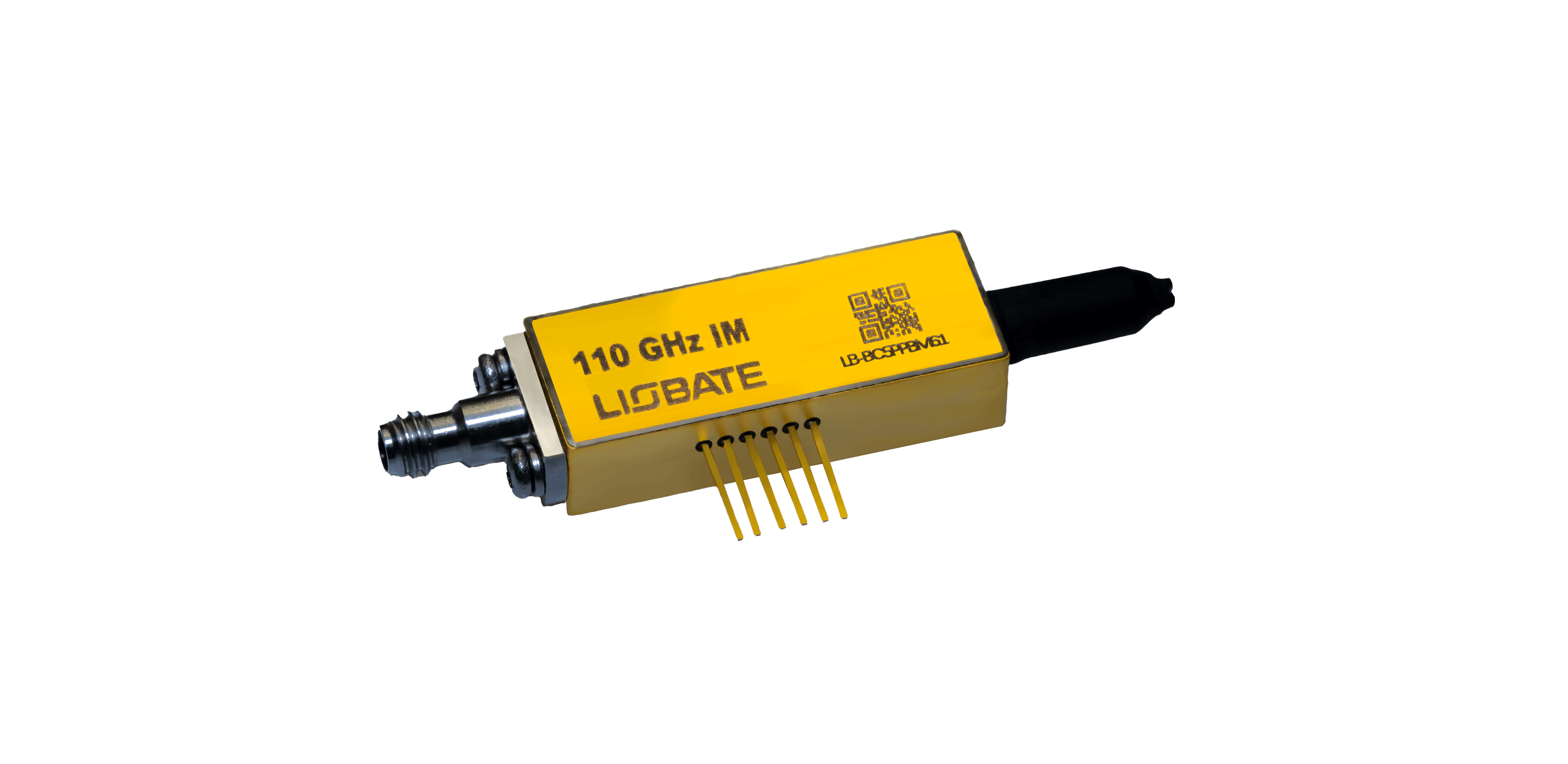
Published TFLN Devices span 20, 40, 67, and 110 GHz intensity options, a 40 GHz phase product, a 40 GHz IQ product, and a 25 GHz comb device. They use those ranges to identify possible architectures, then confirm actual performance through system-level testing, since bandwidth alone does not establish suitability for a commercial network.
Different Modulation Functions Serve Different Network Tasks
Optical modulators provide the bridge between electronic data and an optical carrier. For short-reach links, intensity modulation may offer a direct and economical architecture. Longer or spectrally efficient links often use coherent modulation, where phase and amplitude are controlled together.
Measurement systems may instead need linear analog response, pulse carving, or repeatable spectral sidebands. On this platform, TFLN devices implement these functions with thin-film lithium niobate. The platform is associated with high electro-optic bandwidth, relatively low drive voltage, and low optical loss.
Those characteristics can reduce driver burden and preserve optical power, but the result depends on package transitions, bias control, fiber coupling, and the chosen operating point. Function selection begins with link reach, data rate, modulation format, wavelength plan, and receiver architecture.
They also consider whether the system can support active bias control, digital compensation, and calibration. A simple modulator paired with complicated controls may not be simpler at the product level, while an integrated device may reduce assembly but increase sourcing concentration.
System Budgets Determine Which Device Is Appropriate
The relevant electrical spectrum must remain within the modulator’s usable response. A 110 GHz intensity product can support demanding rates, while a 40 GHz device may provide adequate margin for a lower-rate or test application.
When evaluating optical modulators, they inspect response flatness, package contribution, and group delay rather than treating the nominal cutoff as a complete performance description. Drive voltage affects amplifier choice, board power, thermal load, and signal integrity. Several intensity products in the TFLN device portfolio list half-wave voltage below 3 V, while phase and IQ products are below 3.5 V.
They compare these figures using consistent definitions and calculate the actual swing required for the intended extinction, phase shift, or constellation. Insertion loss consumes laser power and reduces receiver margin.
Listed values range from below 3.5 dB for the phase product to below 6.5 dB for the IQ device and below 9 dB for the comb product. These differences reflect different functions and boundaries, so they build a complete optical budget before deciding whether a specification is acceptable.
Deployment Readiness Extends Beyond Laboratory Performance
Qualification of optical modulators includes optical response, RF behavior, bias stability, temperature, vibration, connector handling, and long-duration operation. Digital links also require eye diagrams or bit-error testing, while coherent systems add constellation and carrier-suppression measurements.
They choose tests that reveal application risk instead of reproducing every possible laboratory characterization without a decision purpose. TFLN devices entering production need clear serial traceability and process-change control. They ask for measurement conditions, calibration methods, lot data, and defined notification of changes to materials, electrodes, fibers, connectors, or assembly.
Statistical distributions are useful because they show whether driver and optical budgets can tolerate normal manufacturing variation. Operations teams should receive diagnostic procedures before deployment. Bias drift, laser degradation, connector contamination, and receiver faults can produce similar symptoms.
Monitoring optical power, control voltage, temperature, and error indicators helps isolate the cause. Serviceability and replacement interchangeability become part of the buying decision when many network nodes depend on the same component family.
Network-generation planning adds another dimension. A device selected for one rate may need to coexist with earlier optics and support a later upgrade. They favor documented operating ranges and stable mechanical interfaces that allow controlled migration, rather than assuming every capacity increase will justify a complete platform replacement.
Optical modulation is important because it converts information into a form that can use the bandwidth and reach of fiber. The technology choice should follow the network architecture: intensity, phase, IQ, and comb functions are tools with different strengths rather than steps on a single ladder of sophistication.
They make the selection through explicit electrical, optical, thermal, operational, and commercial budgets. Prototype links reveal how much of the published device performance survives packaging and integration. The resulting evidence supports realistic specifications, avoids unnecessary overdesign, and gives suppliers measurable acceptance criteria for subsequent production lots.
Mapping each modulation function to a link requirement and acceptance method keeps procurement focused. The Liobate TFLN range can be compared within that map, with package boundaries and lifecycle responsibilities recorded alongside measured performance.
