
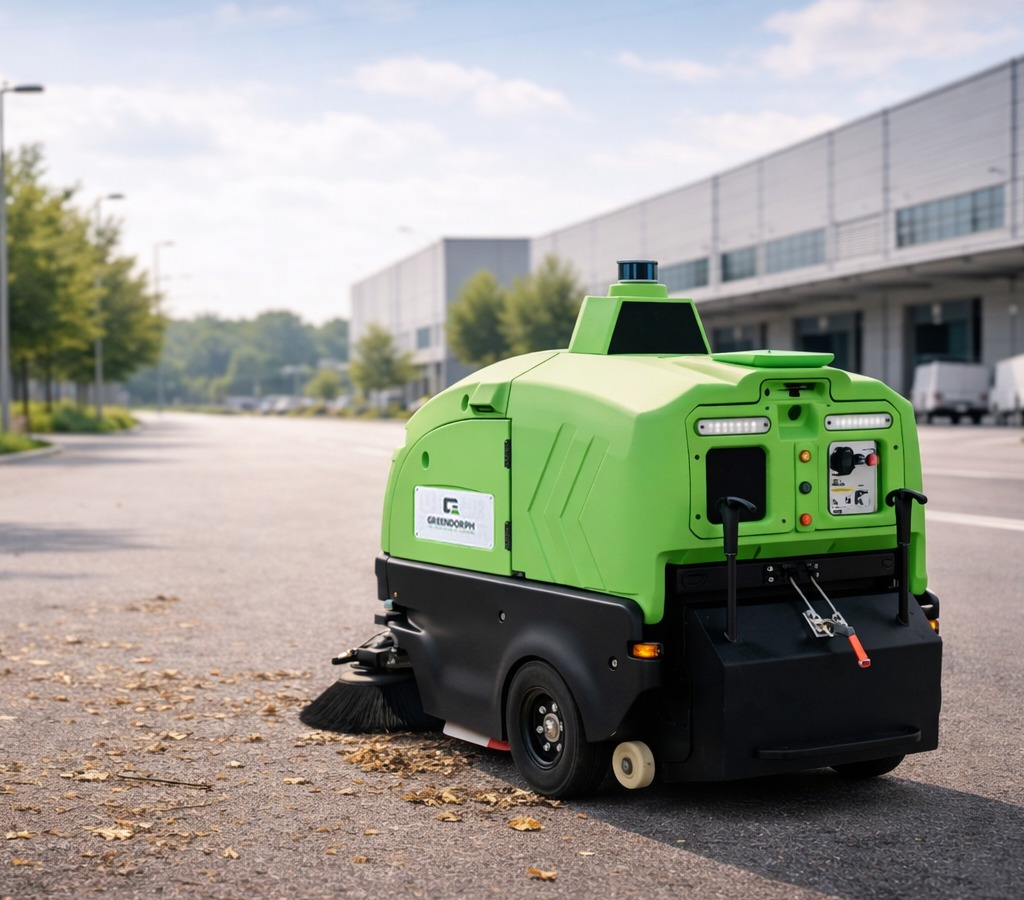
An industrial park contains multiple cleaning zones. Production buildings, loading bays, parking areas, and access roads collect different types of dirt. Electric equipment supports consistent maintenance while reducing reliance on fuel-powered machinery. The first step is matching the machine to the surface and debris, not assuming one system will handle every task.
Start With the Soil, Not the Machine
Fine dust, tire marks, leaf litter, and packaging behave differently. Smooth indoor floors with adhered grime often call for an electric floor scrubber that applies cleaning solution, agitates the surface, and recovers dirty water. Outdoor roads and paved areas usually need sweeping and debris collection first.
A sweeper is not automatically a conventional scrubber. Sweeping systems gather loose material, while scrubbers clean the surface and often recover wastewater. Industrial parks benefit from separate routines for indoor production zones and outdoor circulation areas.
Reduce Routine Pressure on Maintenance Teams
Large sites accumulate dirt throughout the workday. Forklifts track grit near loading docks, delivery vehicles bring dust onto access roads, and pedestrians carry debris indoors. When teams wait until dirt is obvious, cleaning often requires more intensive work and extra passes.
Planned routes distribute work across shifts and prioritize high-traffic points. Electric machines produce no direct combustion exhaust during operation, although total environmental impact depends on electricity supply, battery life, maintenance, and efficiency.
Decide Where Scrubbing and Sweeping Belong
A site map separates tasks by surface and cleaning requirement. Indoor concrete, tile, or coated floors with stubborn residue might need scrubbing and liquid recovery. Parking areas, service roads, and open paved spaces often collect loose debris that a sweeper can gather efficiently. Edges, drains, and areas around parked vehicles still need attention.
Before choosing an electric floor scrubber, review floor material, drainage, slip risk, and drying time. For outdoor lanes, assess turning space, gradients, pedestrian access, and debris type. This helps teams steer clear of investing in equipment that does not match everyday tasks.
Where a Robot Floor Cleaner Fits
Greendorph offers commercial cleaning machines for medium and large areas, including industrial parks, campuses, and transportation sites. Its robot floor cleaner includes the fully autonomous Auto Sweeper YJ130 and flexible sweeper YJ80 models. They are designed for sweeping and outdoor debris management, not as direct substitutes for traditional wet floor scrubbers.
The YJ130 combines sweeping with suction, airflow assistance, and misting spray. It has a 130 cm cleaning width, rated cleaning efficiency of 5,760 m² per hour, and average operating time of 6–8 hours.
These are specifications, not guaranteed output. Route shape, debris load, weather, charging, and bin emptying affect actual coverage. The machine also features automatic charging, water filling, garbage dumping, and preset scheduling functions, although routine inspections remain necessary.
For industrial parks, this type of machine suits outdoor roads, walkways, and open paved areas. Sites requiring wet scrubbing need equipment designed for that separate task. The Greendorph homepage provides further product information for comparing cleaning functions with site layout and maintenance objectives.
Calculate Value Across the Working Week
Purchase price is only one operating cost. Compare current labor hours, contractor expenses, maintenance, consumables, energy use, and downtime with the expected cost of the new approach.
Published area-per-hour figures rarely translate directly into real shifts because obstacles, route transfers, charging, and manual detailing affect productivity.
A site trial creates a more reliable estimate. Select representative routes, record cleaning time and staff intervention, then inspect surfaces after each pass. Compare results with the current routine to identify where automation saves time, where manual work remains, and whether a separate scrubber is still required.
Plan Routes Before Deployment
Map traffic patterns, shift changes, delivery schedules, drainage points, and areas where pedestrians cross vehicle routes. A planned route reduces unnecessary travel and helps teams schedule cleaning when access is safest. Check surface changes and narrow turning points before assigning autonomous equipment to a full shift.
Start with a representative route instead of deploying across the entire site at once. Track completion rates, staff interventions, debris collected, battery use, and cleaning quality. Adjust the map or schedule using those observations before expanding to additional zones.
Keep Results Consistent
Battery charging, brush or suction checks, debris disposal, route updates, and staff training all affect performance. Assign responsibility for each task and log exceptions. When layouts change or seasonal debris increases, supervisors can adjust routes instead of relying on a schedule that no longer fits.
Industrial parks benefit from electric cleaning equipment when selection reflects surface conditions, measured output, and daily routines. A suitable outdoor sweeper for loose debris and a dedicated scrubber for wet floor cleaning create a clearer maintenance plan.
Meet Greendorph at Interclean Shanghai 2026
Maintaining clean and safe industrial floors starts with efficient cleaning equipment. Shenzhen Yunjie Technology Co., Ltd., the manufacturer behind Greendorph, will exhibit at Interclean Shanghai 2026, October 28–30, at Booth N5E25 at the Shanghai New International Expo Centre. Discover professional cleaning solutions and learn more about the exhibition.
